Designing an AI-First Voice Agent Platform From 0 → 1
Building production-ready voice AI agents for lead qualification, onboarding, reactivation, and query resolution—driving measurable reductions in drop-offs and support effort.
Timeline
October, 2024 - December 2025
Role
Product Designer
Responsibilties
Product Design, Web Design, Branding, Marketing Assets



OVERVIEW
Using AI agents to reduce drop-offs in complex BFSI workflows - Supporting users without compromising control or trust
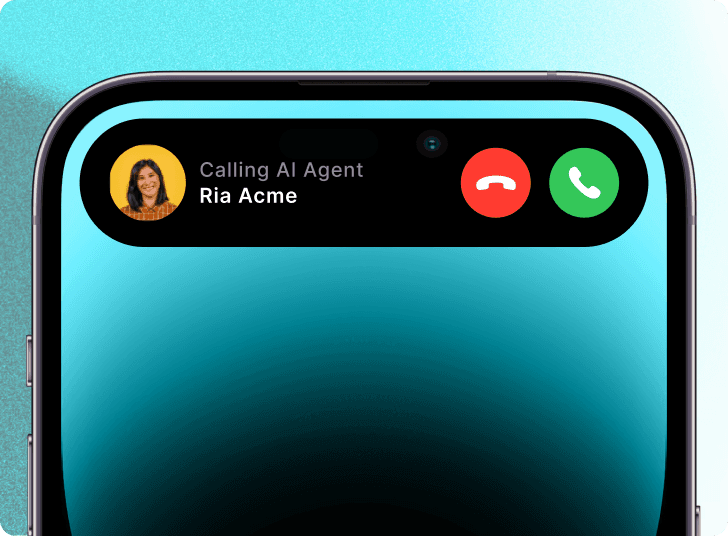
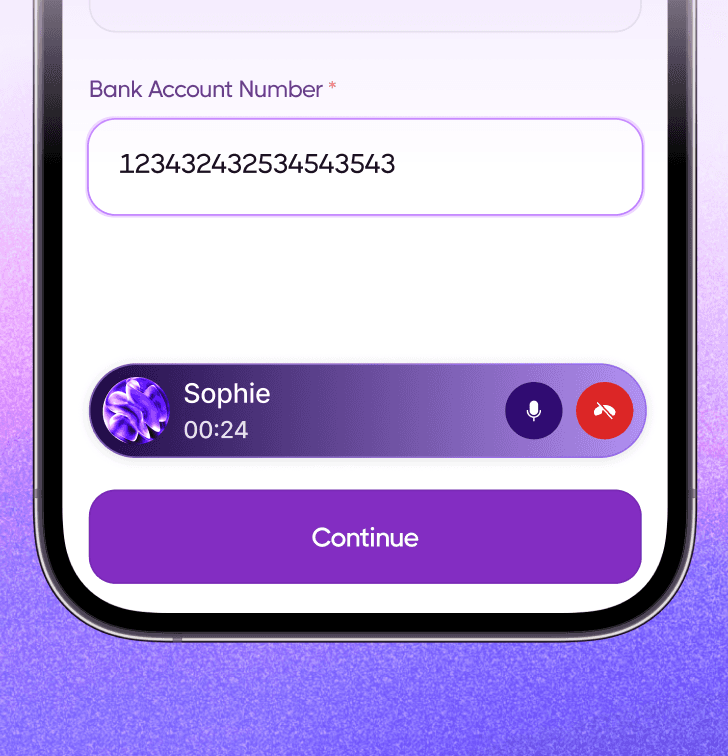
This product is built to help BFSI companies reduce customer drop-offs across complex digital journeys such as onboarding, KYC, payments, and customer support. These workflows are often long, sensitive, and cognitively demanding, causing users to abandon tasks despite high intent.
AI agents are introduced to provide contextual assistance at moments of friction—guiding users, explaining steps, resolving errors, or helping them resume incomplete journeys across in-app and voice channels.
Over time, the agent is designed to behave like a digital relationship manager, offering continuity across interactions rather than isolated, one-off support. The experience focuses on building trust through transparency, clear user control, and careful intervention, ensuring AI assistance improves completion and confidence without overstepping in sensitive financial flows.

CORE PROBLEM
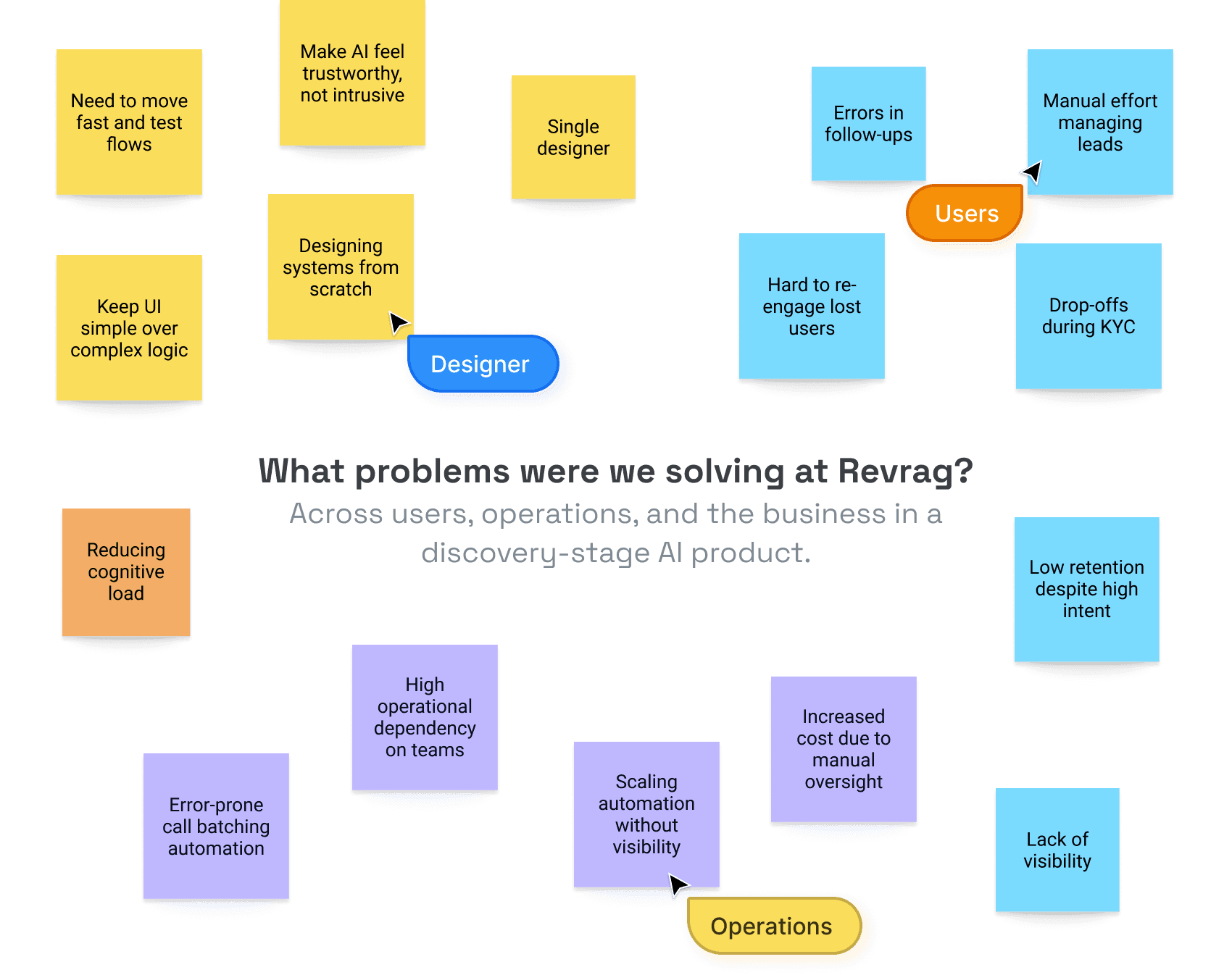
Users abandoned high-intent BFSI journeys not due to lack of interest, but due to complexity, uncertainty, and lack of timely guidance at critical moments.
MY ROLE
I worked as a product designer across core product design, system structuring, and brand expression.
Given the stage of the company, my role extended beyond a traditional product design scope. Alongside designing core workflows and interfaces, I contributed to defining information architecture, supporting demos, creating early marketing assets, shaping the website, and evolving the visual language of the brand.
Rather than following a fixed design framework, my responsibility was to help the team move from vague ideas to usable systems as efficiently as possible.






Target audience
Revrag is designed for teams that operate at the intersection of customer engagement, automation, and scale. The platform supports different roles across the lifecycle of deploying, managing, and monitoring AI agents.

Forward-Deployed Engineer
Widget Embed
Agent Deployment
Speed
Faster integrations
Readability
Stable agent behavior
Flexibilty
Custom workflows

Relationship managers
They need to engage users at the right moment with full context, without manually tracking conversations or handoffs.
Calling Agents
Follow-ups
Timing
Right moment engagement
Context
Context-aware conversations
Reach
Scalable user outreach

Customer support teams
They need visibility into AI-led interactions and a smooth way to step in when automation fails.
Call History
AI Agents
Accuracy
Correct, reliable responses
Visibility
Full conversation context
Escalation
Smooth human handoff
THE PROCESS
How design decisions were made at Revrag
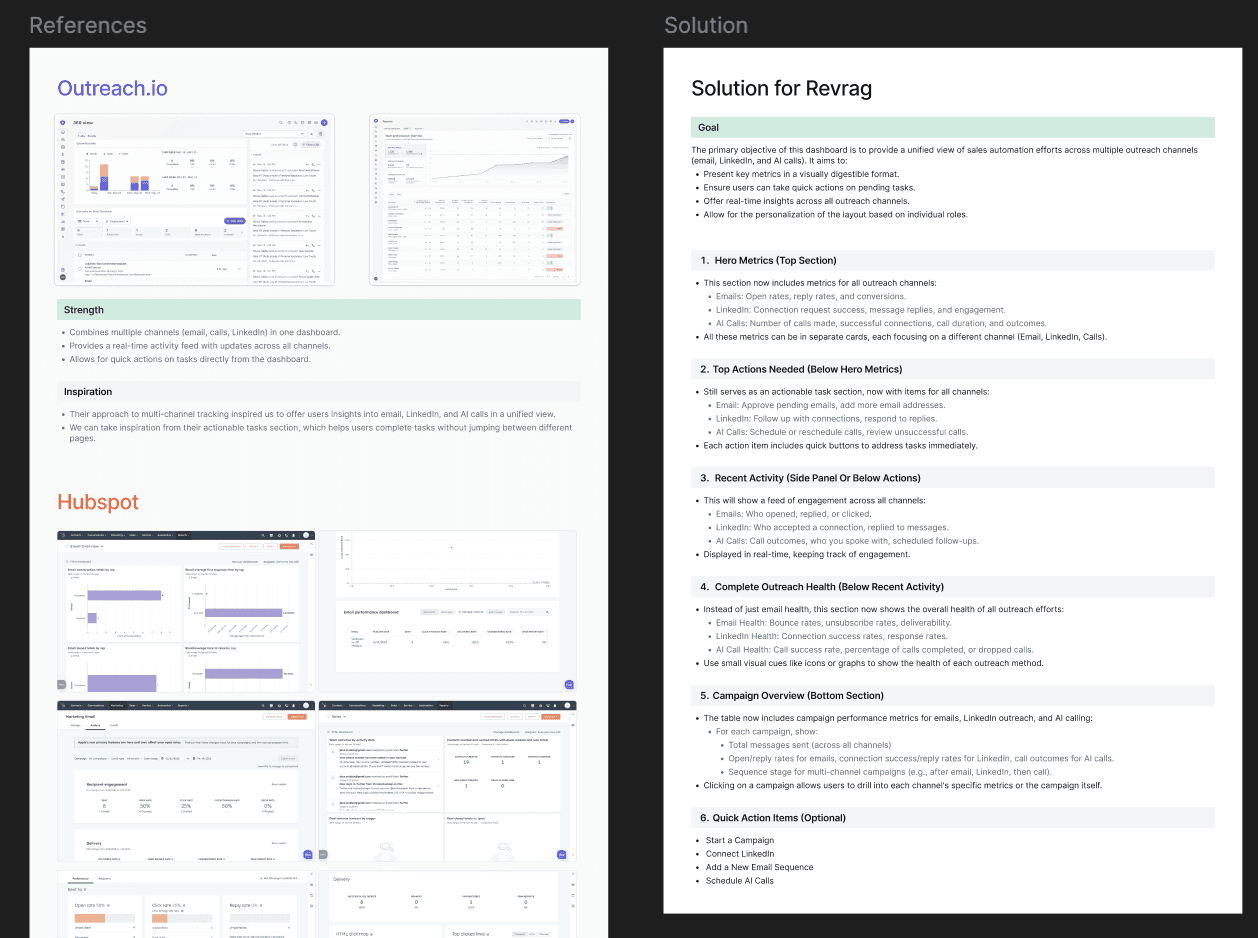
Design at Revrag was highly contextual and adapted based on the problem being solved.
My workflow typically began with sitting with the PM (and often the CEO) to understand the problem space, constraints, and assumptions. I initially focused on absorbing context and documenting requirements before jumping into solutioning.
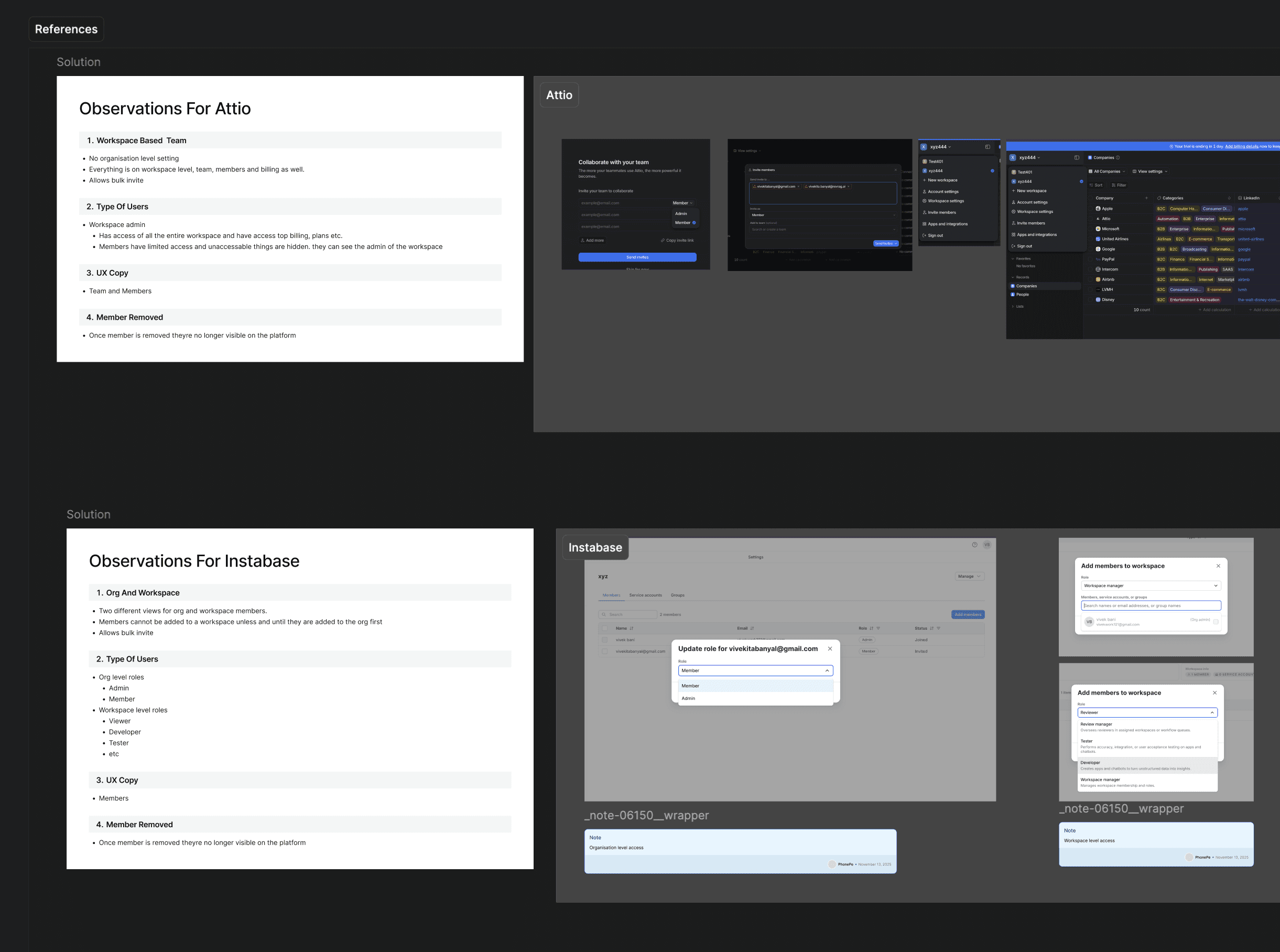
This was followed by quick secondary research and studying existing processes to understand current behavior and how similar problems were approached elsewhere. Once I had enough context, I reconnected with the PM to clarify gaps, challenge assumptions, and align on the core problem to solve.
Early drafts were intentionally exploratory. Creating a first version helped surface missing flows, edge cases, and system gaps. These drafts became discussion tools in regular product–design syncs, where ideas were refined through multiple iterations.
Once a direction was aligned, I worked closely with the engineering team to understand technical constraints, gather feedback, and refine solutions before final handoff.
Applying UX methods based on problem context
Given the exploratory nature of the product, I did not follow a rigid design process. Instead, I applied different UX methods depending on the nature of the problem.
System-level problems required information architecture and flow mapping to bring clarity across complex workflows. Behavior-driven issues relied more on observation, proxy research, and analysis of call logs and internal execution patterns. UI-heavy problems were explored through rapid visual iteration to validate direction quickly.
This flexible approach allowed design to move fast while still grounding decisions in user behavior, system constraints, and real operational feedback.
Sneak Peak
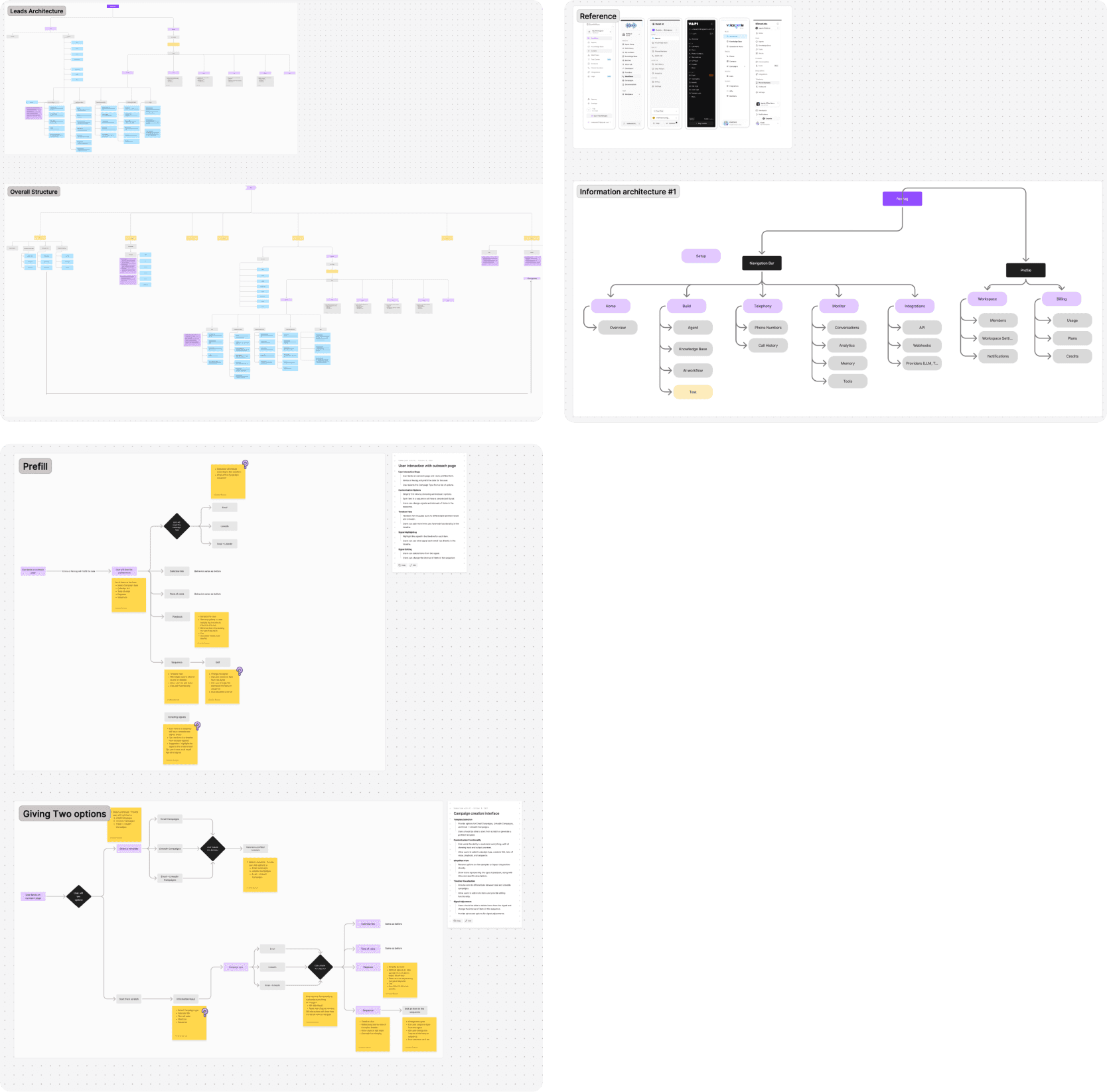
A glimpse into key product surfaces designed to create clarity, control, and trust while working with AI agents at scale.
MAJOR PROJECTS
Building In-App Agent
We identified that a major cause of drop-offs for our clients was long, complex onboarding and KYC flows. While customer support teams helped mitigate this, they couldn’t fully solve the problem at scale.
Problems
Human-led support often breaks down due to:
Limited availability at critical moments
Lack of full user and journey context
Inability to perform actions on behalf of users
Human error under pressure
Fatigue from handling already frustrated users
Our Solution
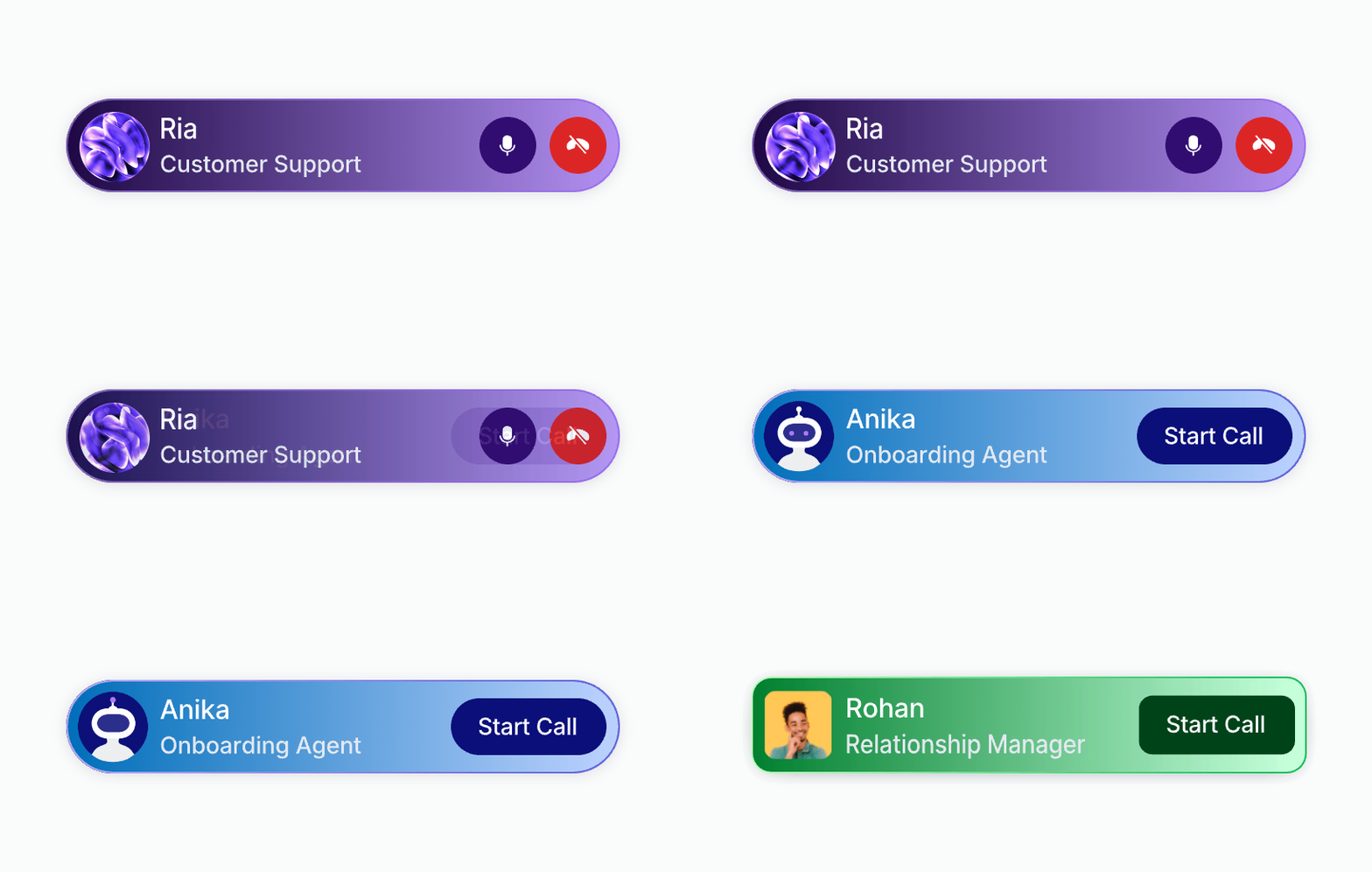
In-app agent support that:
Intervenes at the right moment
Operates with full journey context
Guides users step by step
Reduces dependency on human support
Hands off to human teams only when necessary

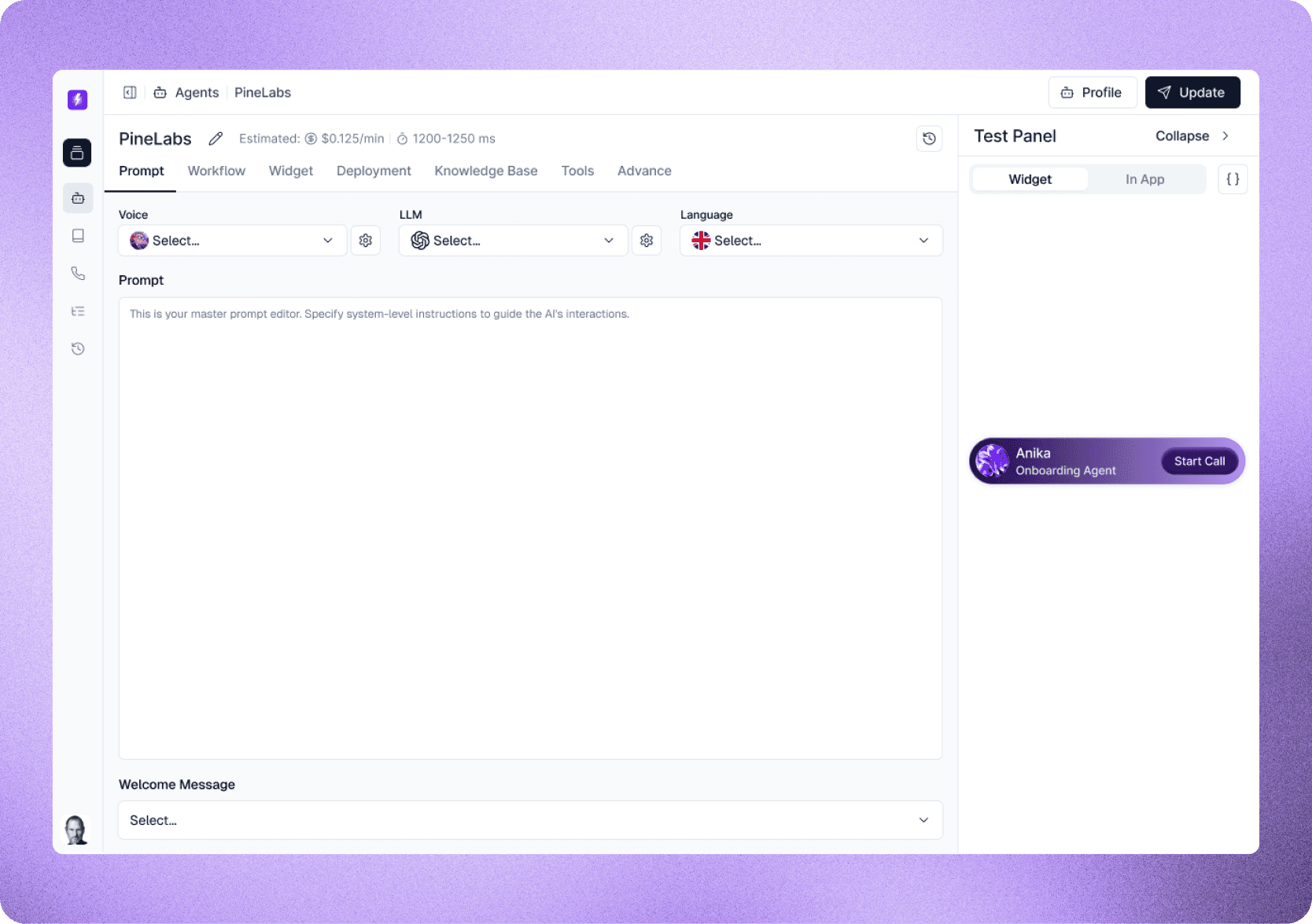
Agent Builder
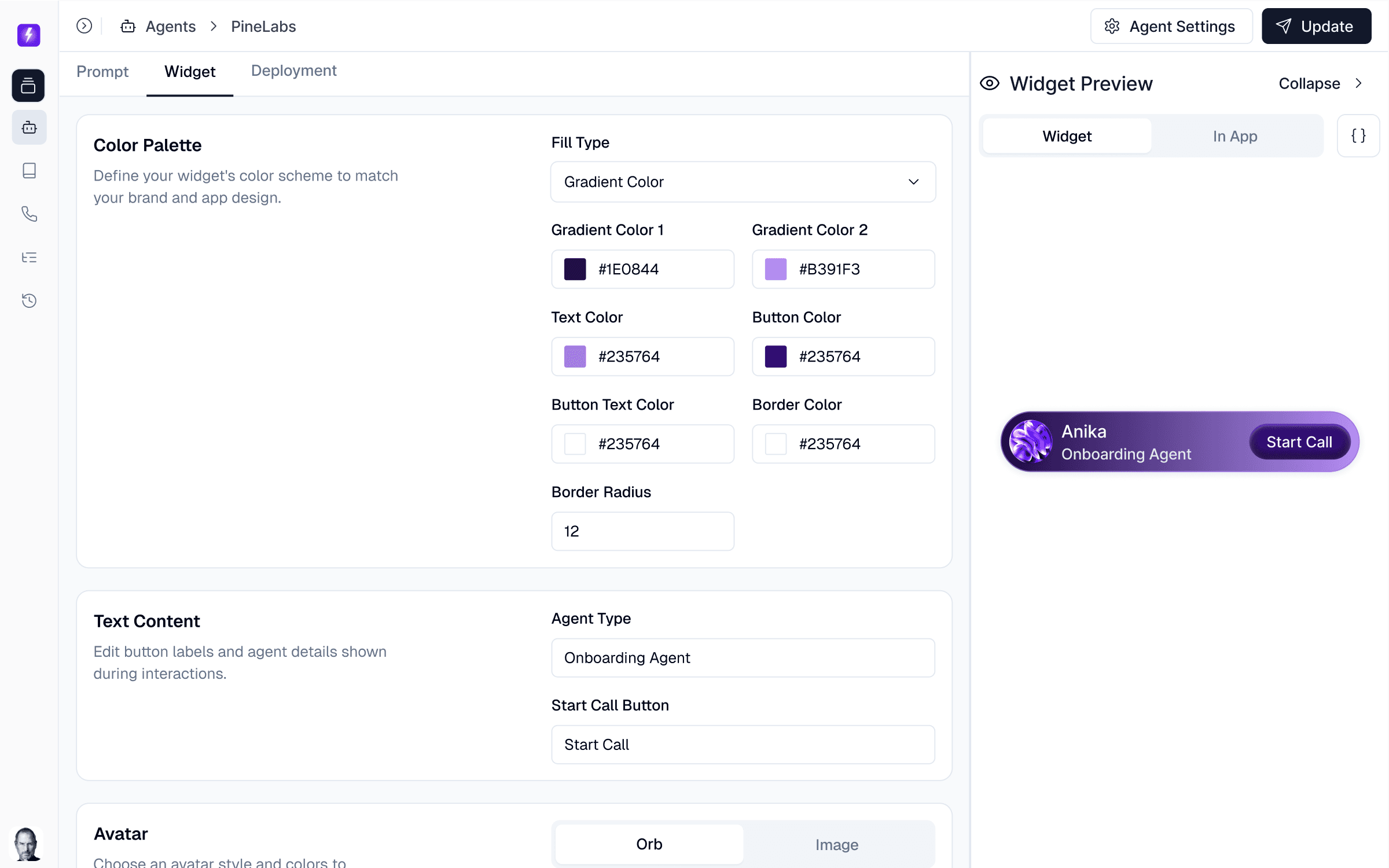
The Agent Builder allows teams to create, train, test, and deploy AI agents through a structured workflow. It abstracts technical complexity while giving users clear control over agent behavior, configuration, and deployment. The goal is to make AI agents predictable, testable, and safe to operate at scale.
Impact
Reduced cognitive load while configuring complex agent behavior
Faster iteration through real-time testing and preview
Fewer deployment errors due to clear guardrails and visibility
Increased confidence in agent performance before going live
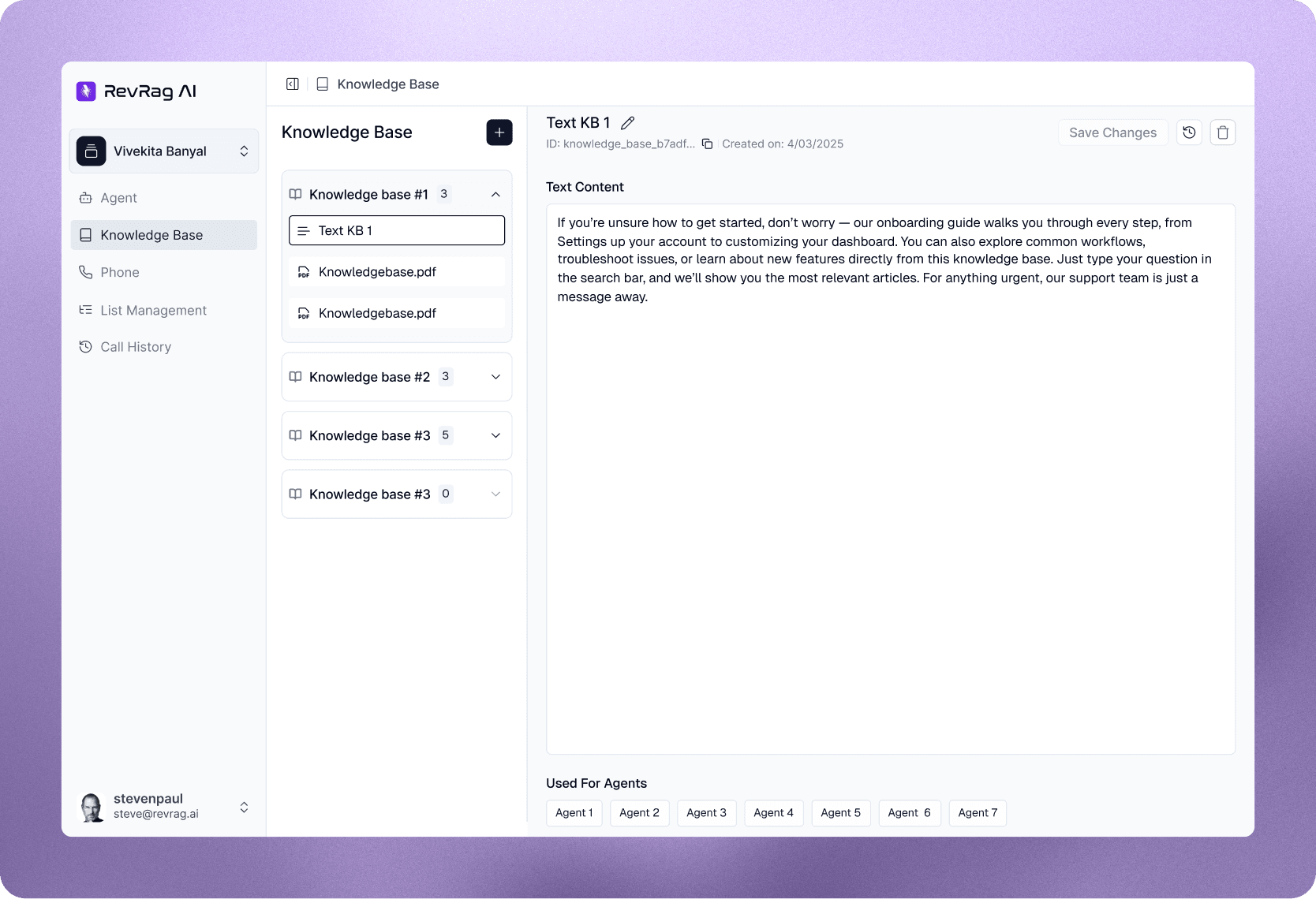
Knowledge Bases
Knowledge Bases act as the source of truth for AI agents, defining what the agent knows, references, and is allowed to say. They decouple knowledge from agent logic, enabling accurate, consistent, and controllable conversations across calls and in-app experiences without retraining the entire agent.
Impact
Reduced hallucinations and incorrect responses through structured knowledge sources
Improved consistency across onboarding, support, and follow-up interactions
Faster updates to agent knowledge without disrupting live agents
Increased trust in AI responses due to clear ownership and visibility of content
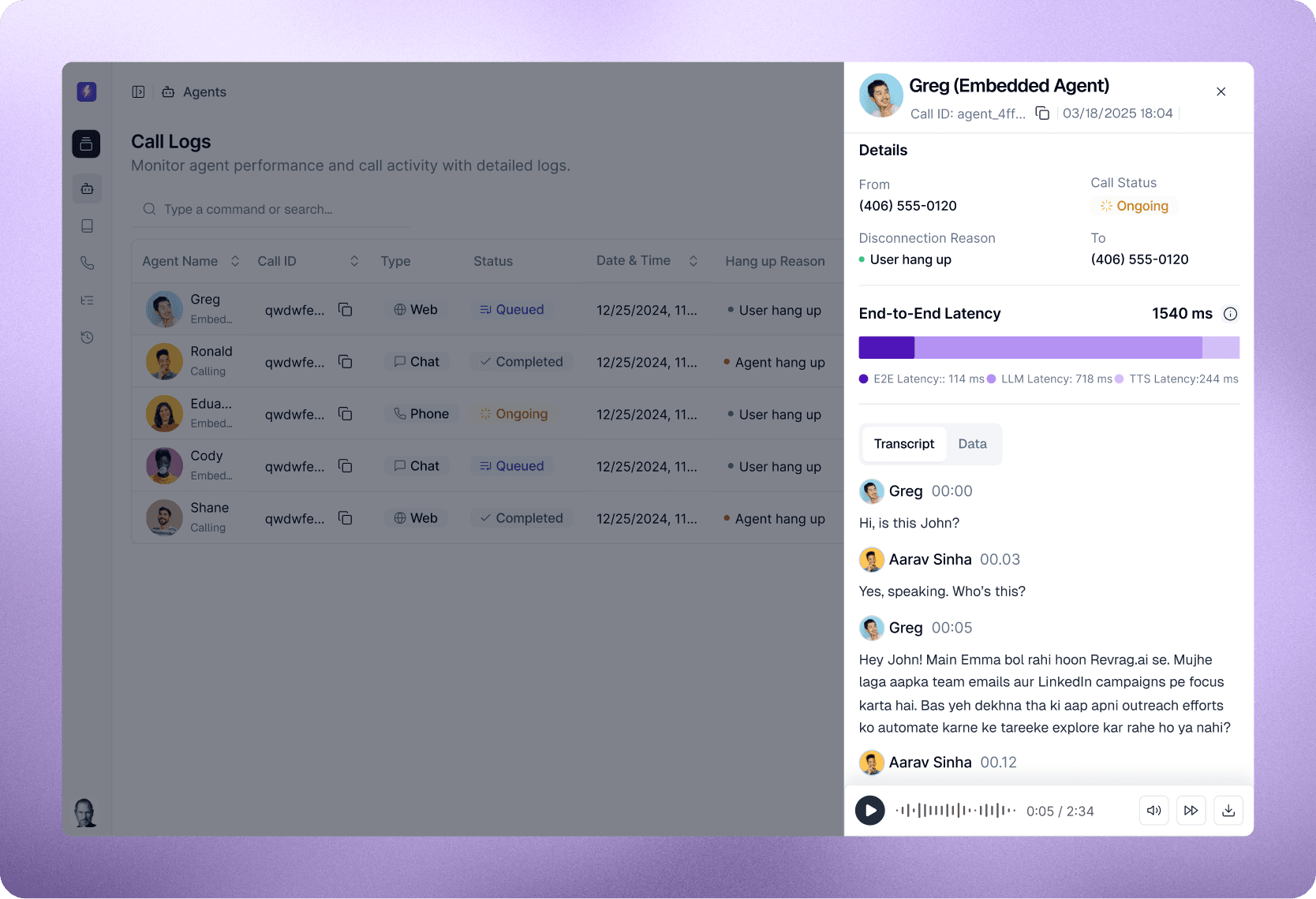
Call & Session History
Call & Session History provides teams with full visibility into how AI agents interact with users across calls and in-app sessions. It brings together conversation timelines, transcripts, latency, and outcomes in one place—making agent behavior observable, debuggable, and improvable over time.
Impact
Improved visibility into real agent–user interactions
Faster identification of failures, drop-offs, and performance issues
Reduced time spent debugging through centralized transcripts and metadata
Enabled data-backed refinement of agent behavior and workflows
Increased trust in AI systems through transparency and traceability
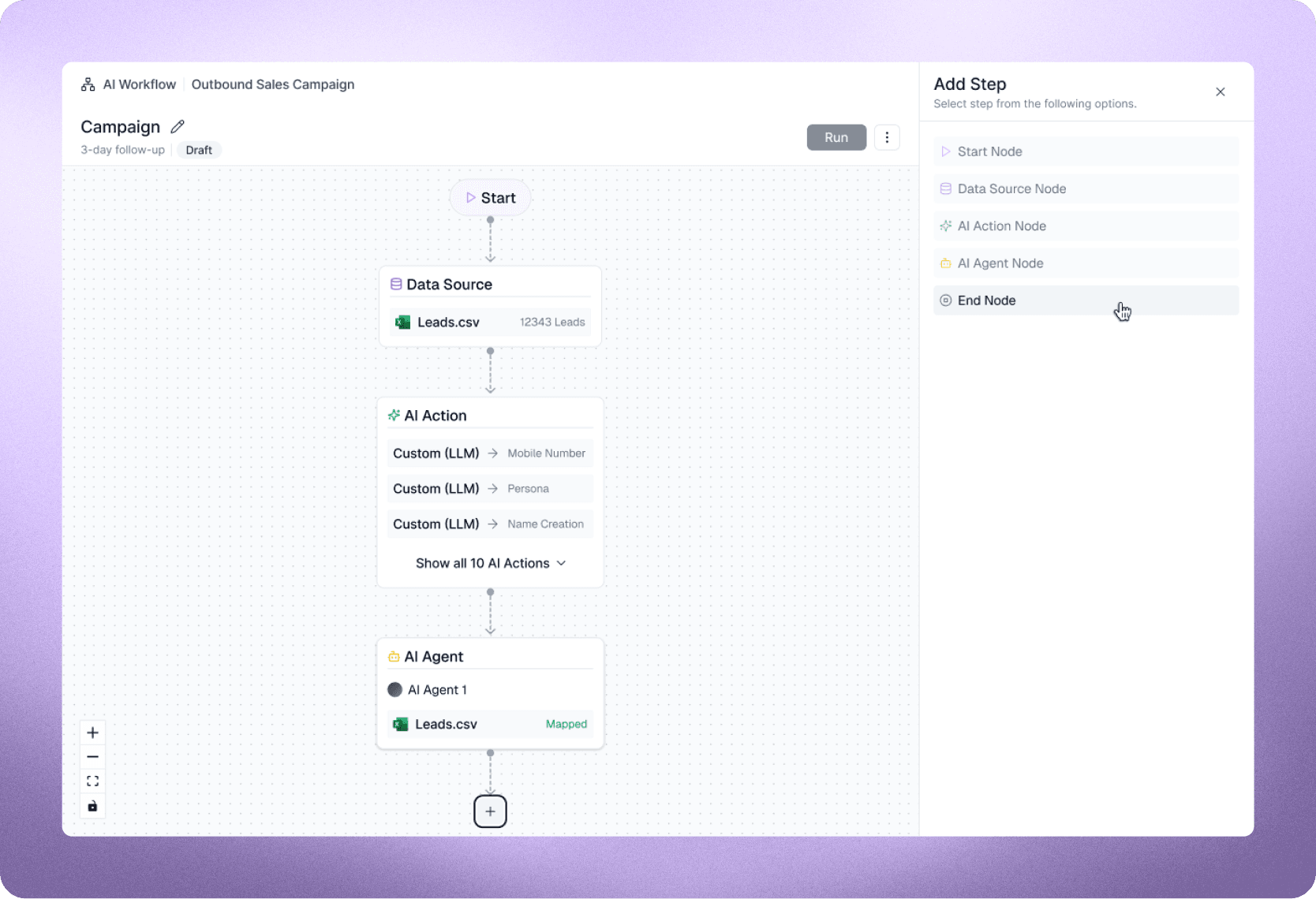
AI Workflows
AI Workflows define how agents operate at scale by orchestrating data, actions, and decision logic into repeatable, controlled execution paths. They enable teams to automate complex tasks while maintaining visibility, reliability, and control over how and when agents act.
Impact
Reduced manual effort by automating high-volume, repeatable tasks
Improved consistency in agent behavior across large datasets
Greater control over execution logic, retries, and failure handling
Faster issue detection through clear run states and execution visibility
Enabled safe scaling of automation without increasing operational overhead
OUTCOME
Led product design from 0→1, establishing the foundational UX for AI voice agents, embedded in-app agents, and orchestration workflows.
Designed the core AI orchestration system from scratch, reducing manual effort for Product and Customer teams by ~75%.
Enabled 98% instant query resolution through embedded AI agents, contributing to a 20% reduction in drop-offs and 100% lead coverage.
Improved onboarding and lead qualification flows, resulting in 6–10% higher conversion, 3× increase in qualified leads, and up to 3 days reduction in processing time.
Scaled the platform to enterprise readiness, supporting adoption by PhonePe, Razorpay, Deloitte, Motilal Oswal, and 20+ additional customers.
Designed and shipped the company website, achieving a 92% SEO score and supporting 100K+ annual interactions.